A single premium AU sculptural lighting brand. The defensible substrate the brand strategist named: forms that could not have existed before generative geometry met 3D printing. The design system is gallery-grade — warm cream paper, eucalyptus accent, brass highlight, Fraunces italic doing the emotional work, Inter holding the UI, JetBrains Mono on every spec and price. Premium without shouting.
Maik makes objects whose forms are only possible because AI designs them and 3D printers make them. Premium positioning. Single category at launch (sculptural USB-C lighting). The visible craft — every layer line, every parametric ridge — is the brand signature.
The brand never raises its voice. Generous whitespace. Single bold visual gesture per screen. The serif italic does the emotional work. Confident-industrial, not handmade-charming.
Steve appears once per page, sparingly. Plain language. No slogans. No exclamation marks. No emoji. Product names read like piece titles in a gallery. Specs read like a museum plaque.
Every PDP carries a "how it was made" block — print time, filament weight, finishing notes, designer note from the agent fleet. The making story is the product story.
95% of the system runs on paper, ink, and a muted neutral ramp. The two accent colours (eucalyptus + brass) appear in moments — hover states, single CTAs, brand signatures. Never as background fills.
Three typefaces, three roles. Fraunces (variable, optical-sized, italic-led) carries every emotional brand moment. Inter holds the UI and body. JetBrains Mono is on every spec, price, drop number, and metadata.
Fewer components used well. Buttons in three variants. Cards with one shape. Inputs unified. No floating UI flourishes — the brand is the layout and the type, not the chrome.
PRIMARY · GHOST · LINK
Pill radius. Hover state shifts primary to eucalyptus. Ghost inverts on hover. Link is the lightest weight.
OUTLINE · EUCALYPTUS · BRASS · INK
Outline default. Filled variants used only for moments that need attention.
EMAIL · TEXT · SEARCH
NUMBERED · SLOW READING
The numbered eyebrow + serif italic combo is the system's signature.
Tall 4:5 imagery, warm-tone backdrops, serif italic name, mono price. Hover lifts subtly. No "Add to cart" on the card itself — the card invites the click into the PDP, where the story lives.
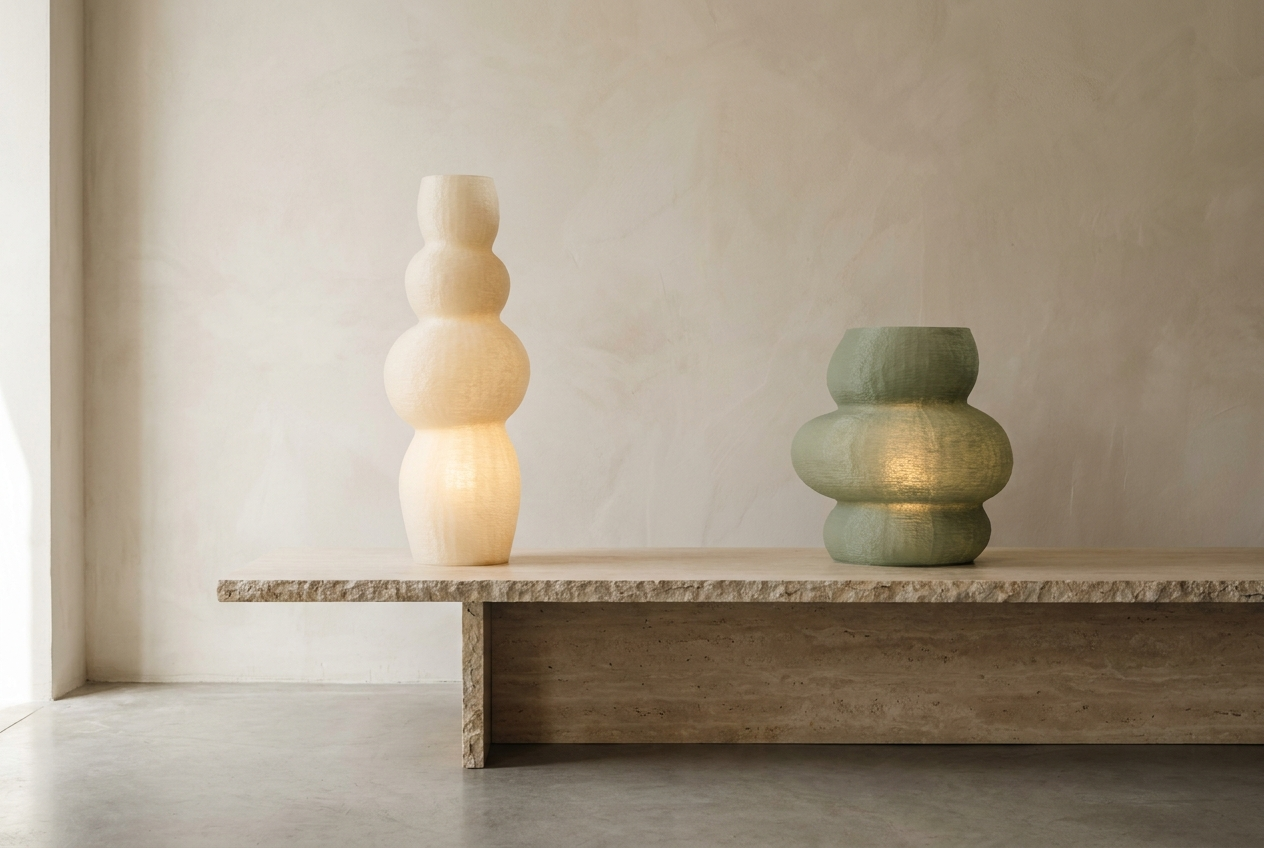
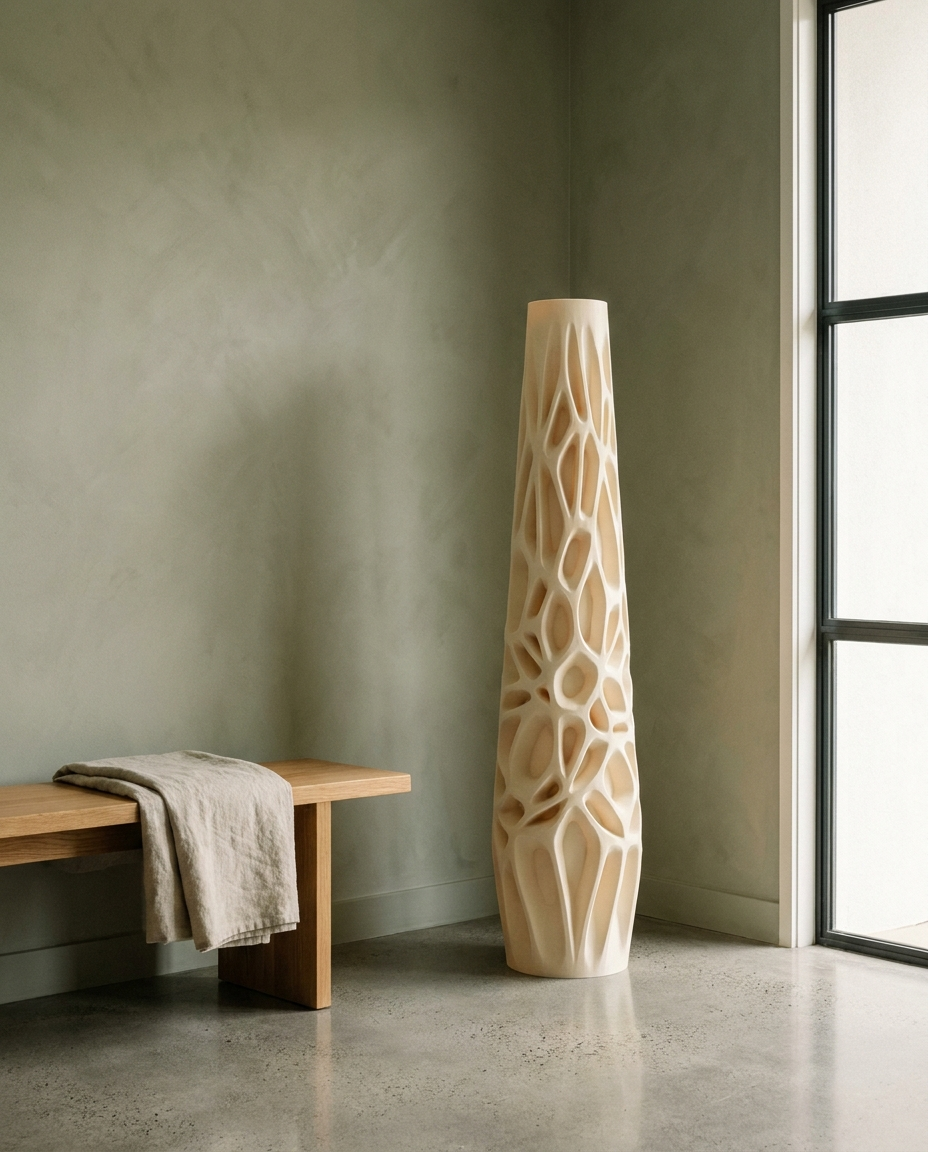
Every Maik object lives on the same parametric language — ribbed, sculptural, USB-C, plant-based PLA — but moves across scales from the 22cm desk piece to a 1.4m floor lamp. The brand's growth path is across scale and surface, not across category.
PAIR STUDY · M-001 + M-002 · THE RANGE EXTENDS BY SCALE
M-004 · THE FLOOR · 1.4M COLUMN · YEAR-ONE FLAGSHIP
A condensed product detail page. The first scroll is image + name + price + buy. Below that lives the slow-reading: how it was made, who made it, what the materials are, how long it takes.
A parametric ribbed shell printed in plant-based PLA. The ridges trace a generative geometry that no injection mould could release. USB-C powered, warm-white internal LED, replaceable puck. Limited to 50 in this colourway.
The Cream is the first object in the M series. The geometry is the result of a long generative pass — we ran the design agent against three hundred ribbed forms before this one. It prints in four hours and the surface light catches the layer lines as design, not artefact.
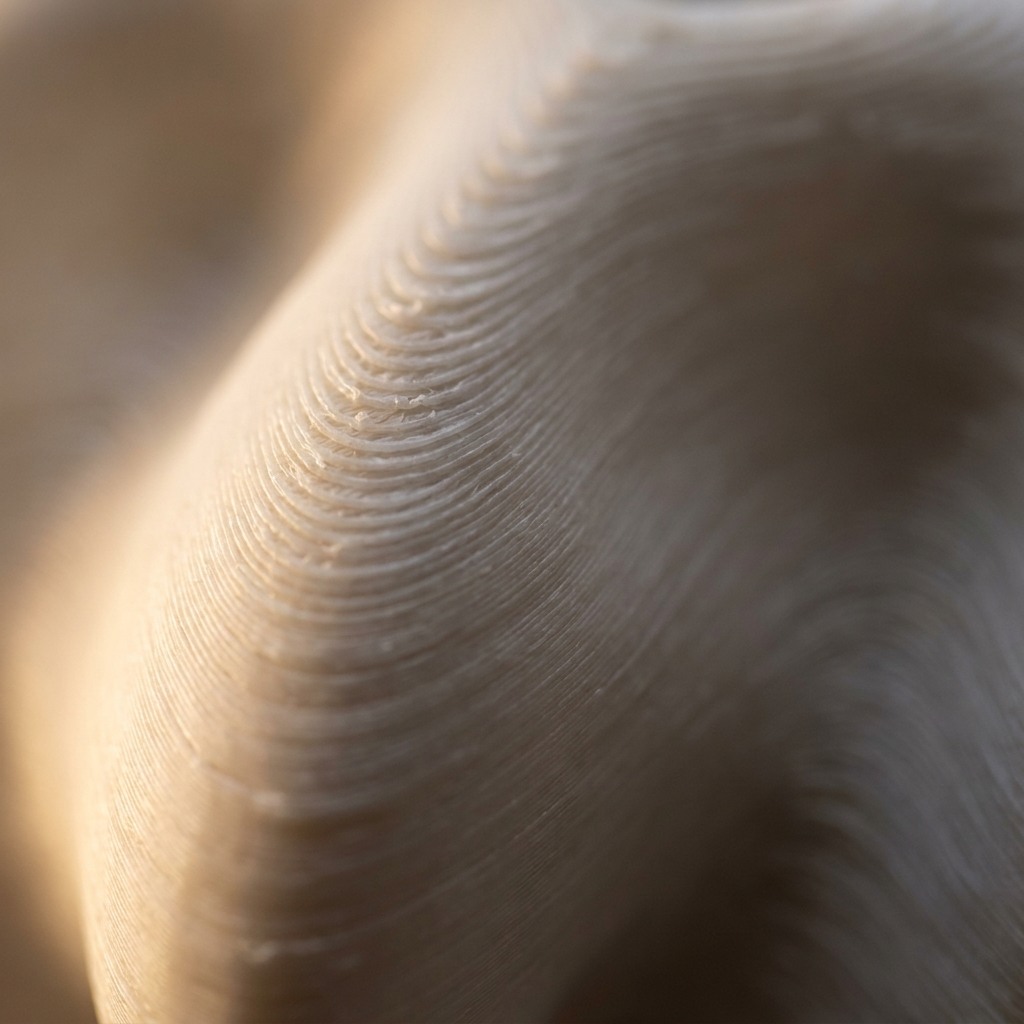
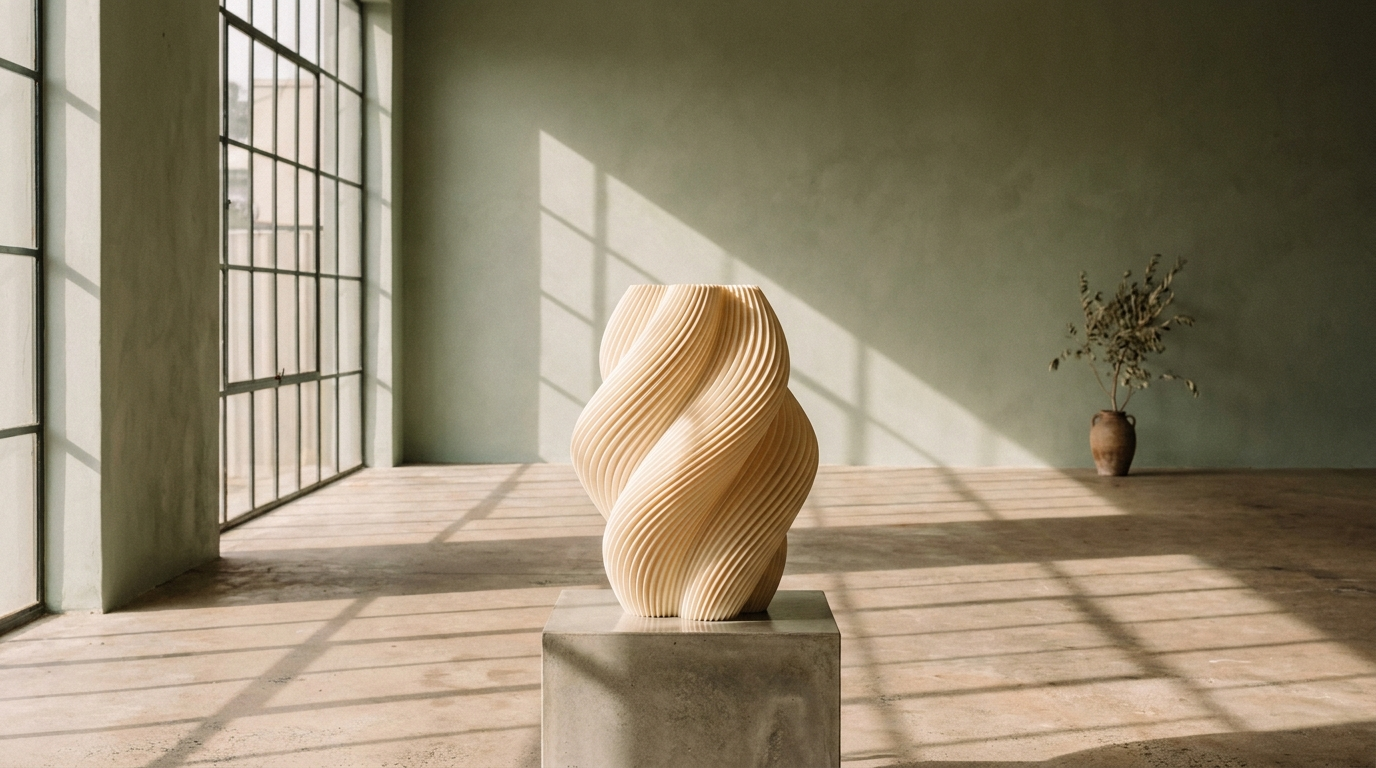
Maik does not hide the print process — it celebrates it. Every product photograph respects the layer line as material honesty. The brand is built on objects that could only have been made by a printer; the prints have to look like prints.

Plant-based PLA, printed at 0.16mm layer height on a Bambu P1S with AMS. The horizontal ridges are not a flaw to apologise for — they are the fingerprint of the process. Photographed with raking soft daylight to make the topography visible.
The product copywriting agent (Quill) is briefed to never use the words "smooth," "flawless," "polished" or "perfect" — those are commodity-3D-print language. The Maik vocabulary is "ribbed," "carved," "sculpted," "considered."
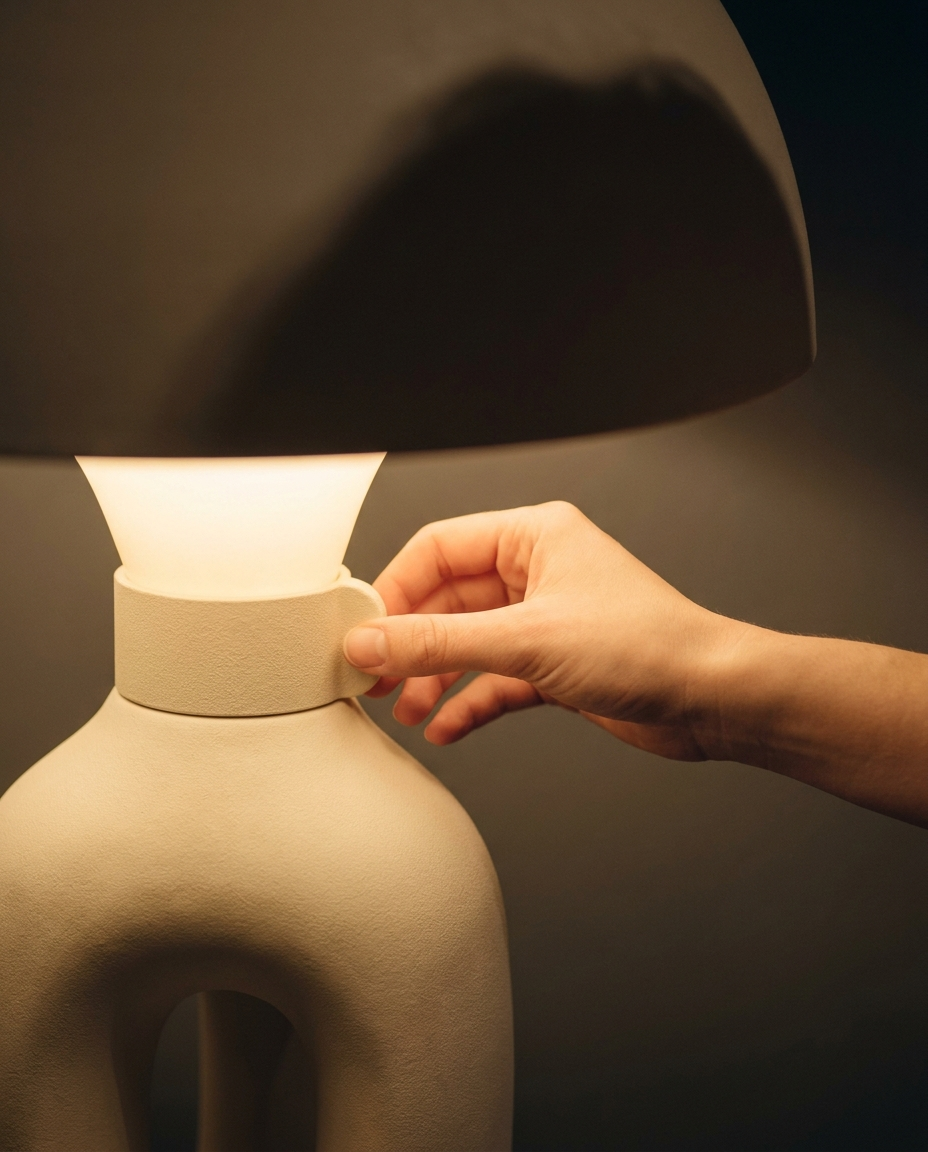
One human gesture per page maximum. A hand placing the object, a hand turning the puck. Never a face, never a full model. The hand exists to give the object scale and to ground the brand in the human-craft side of the AI-fleet thesis.
The photography agent (Lumen) is briefed to use unstyled neutral-skin-tone hands, no jewellery, no nail polish, mid-gesture. The hand is service to the object, not subject.


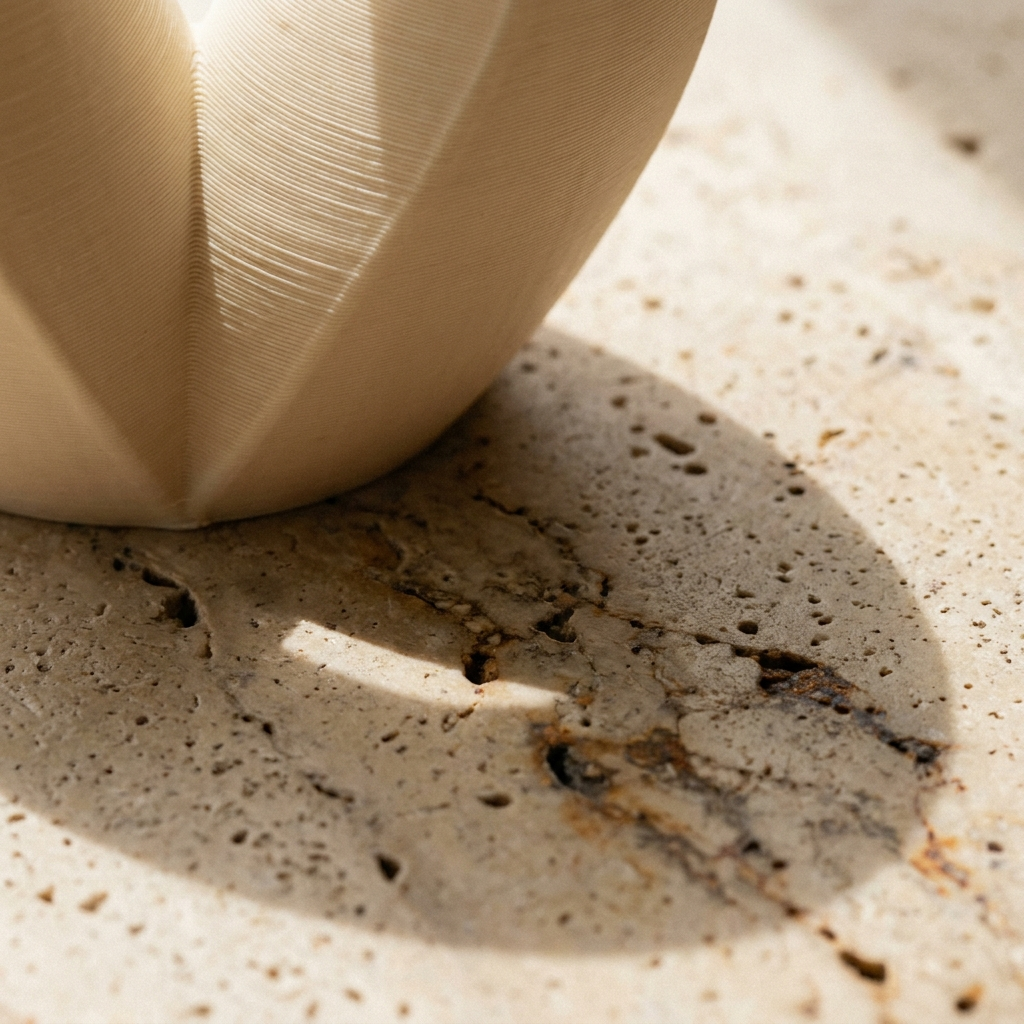
Every product page carries one image of the object meeting its surface — travertine, oak, raw concrete. The shadow is a compositional element, not a byproduct. The studio agent (Lumen) treats the surface as a co-subject, the same way Aesop treats the apothecary counter.
This is the brand signature crop — used in PR, lookbooks, and on the About page. Never used as a hero on a PDP, where the product needs to lead.
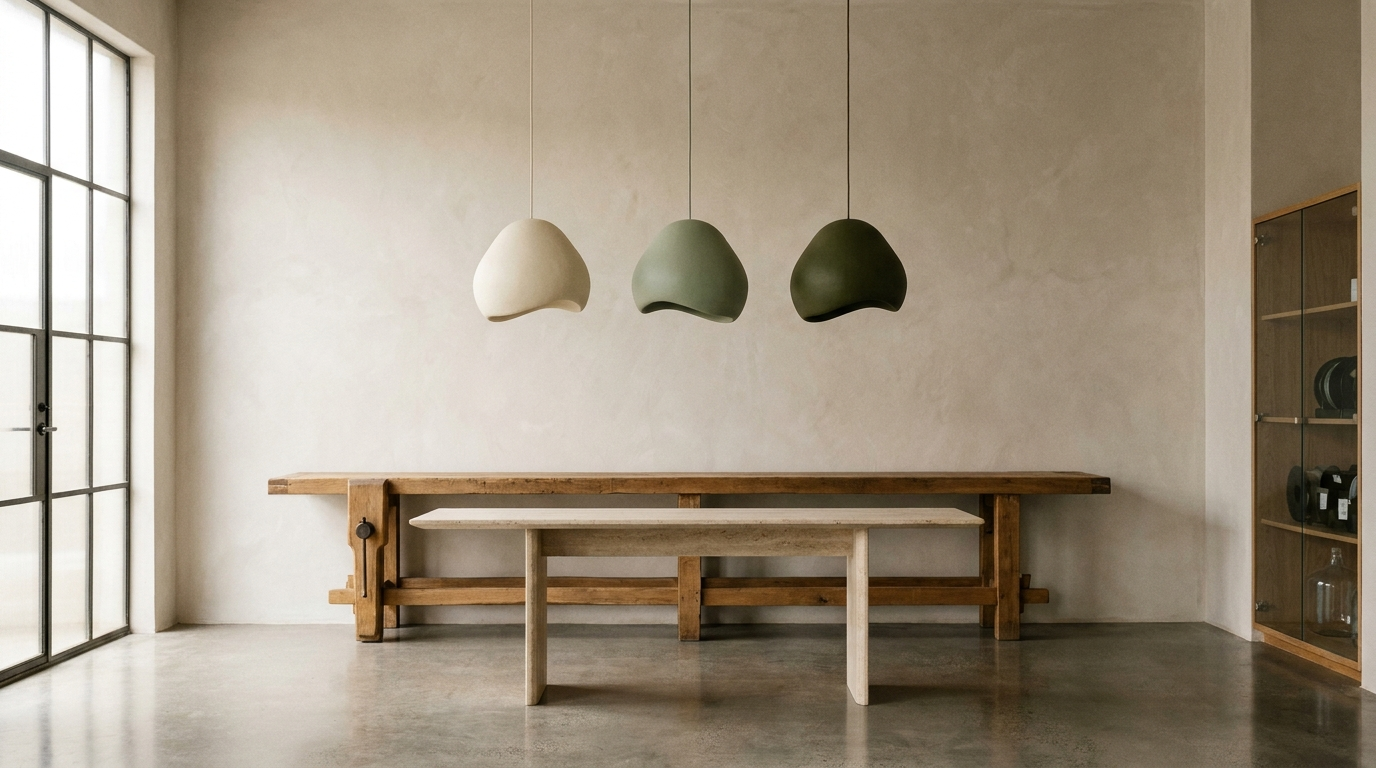
Twelve frames generated for the launch lookbook via Higgsfield. Each composed to read as design-press editorial — Wallpaper magazine, Vincenzo De Cotiis interiors, Nilufar Gallery installation. The object placed in its natural habitat: warm light, raw concrete, oak, travertine, limewash plaster.
PHOTOGRAPHY · HIGGSFIELD AI MARKETING STUDIO · 44 SHOTS GENERATED · ART DIRECTED BY THE LUMEN AGENT · WARM-NEUTRAL EDITORIAL GRADE
Motion supports reading. Never decorates. Every transition uses the same easing curve — cubic-bezier(0.22, 1, 0.36, 1) — so the brand feels physically coherent.
First-person where appropriate, sparingly. Plain language. No corporate "we". No exclamation marks. No emoji. Product copy reads like a designer explaining the object, not a brand selling it. The AI-operated story lives in trade press; the on-PDP voice stays human-studio.
Sculptural lamps designed by an in-house AI and printed to order from plant-based PLA. Each one takes a day. We make every piece in Melbourne.
220 grams of corn-based PLA, sliced at 0.16mm layer height, printed across four hours on a single P1S. The colourway is two filaments blended through the AMS — we tested twelve before settling on these two.
If anything arrives wrong, email us. We will reprint and resend.
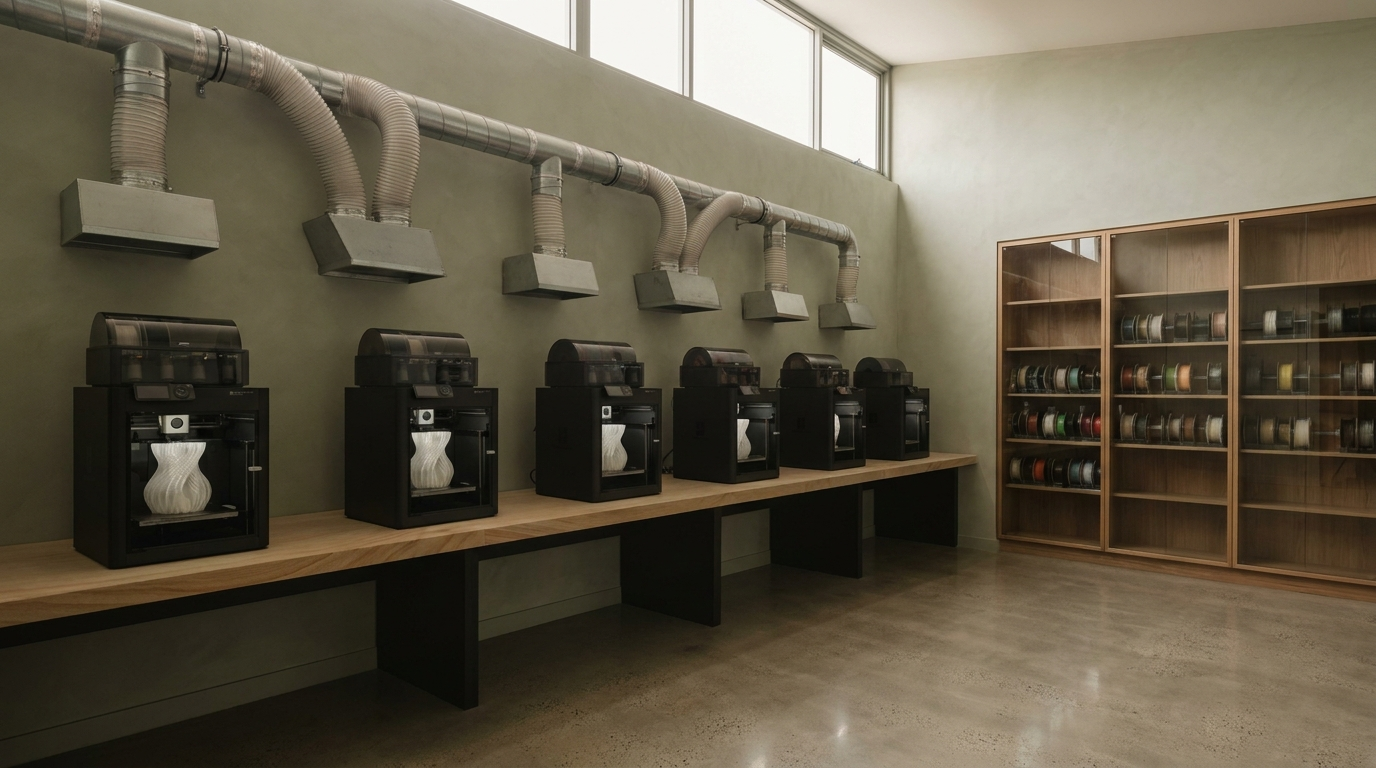
The Maik atelier — eight BambuLab P1S printers plus one X1C reference machine in a Melbourne light-industrial studio. Photographed deliberately as architecture, not industry. Daylight, polished concrete, oak, sealed filament storage, ventilation engineered to hide. The fleet itself is part of the brand surface — and it photographs well.
THE ATELIER · MELBOURNE · 8 P1S + 1 X1C · 4,160 PRINT-HOURS / MONTH

Prototypes from a Tuesday morning slicing pass. Three colourways tested on the same generative geometry. The Maik visual language treats production process the way ceramicists treat the kiln — visible, considered, never apologised for.
This crop becomes the brand's About-page hero and the Yellowtrace / Habitus pitch lead image.
Forge orchestrates 14 named specialists. Atlas writes listings. Lumen art-directs photography. Quill maintains the voice. Beacon runs paid. Sage compounds SEO. Ember runs lifecycle EDM. Anvil schedules the print queue. Hearth orders filament. Smith drafts supplier emails (never sends — per the no-outbound-without-approval rule). Echo triages customer service. Mercury handles returns. Pulse runs social. Oracle compiles the Monday digest. Herald coordinates drops. The brand's surface — what you see in the store — is the visible output of a coherent, named, accountable fleet.
Production backbone. One instance, multi-tenant ready. The fleet's compound advantage lives here — these scale super-linearly across future brands when Maik earns the right to extend.
Brand voice + visual identity. Each gets fine-tuned voice adapters by month 3. Where the brand-coherence work lives. Steve approves anything new; agents propose autonomously inside the brief.
Customer-facing surfaces. Echo triages CS, Mercury handles returns, Beacon runs paid. Every outbound email, every refund >$50, every ad goes through Steve for first 90 days. Trust earned, not granted.